Still Life as Personal Language:
Reconceptualizing Vanitas
2025-2026
Throughout my final year at St. Edward’s University, I studied and researched how still life can function as a visual language, one rooted in historical tradition while remaining deeply connected to personal expression.
Reconceptualizing Vanitas uses still life as a way of speaking without words. Instead of relying on direct explanation, I build meaning through objects and the way they are arranged. Each image works like a quiet conversation, where nothing is directly stated but everything is suggested. Influenced by the symbolism and mood of Vanitas, the work explores how items can hold emotional weight and reflect ideas about time, intimacy, and identity.
These objects act as stand-ins for feelings and memories that are often difficult to put into words. Through their placement, they begin to suggest narratives about relationships and shared history. Some objects point to care or closeness, while others hint at distance or change. Natural elements like flowers or branches appear alongside personal items, creating a sense of life while also reminding us that everything shifts over time.
Rather than presenting still life as something purely aesthetic, this project leans into symbolism and meaning. It draws from historical traditions while staying rooted in the present, allowing each image to hold multiple layers. The work resists the idea that still life should be simple or minimal. Instead, it embraces detail and invites the viewer to spend time with each scene. Meaning is not immediate, but something that slowly builds through looking.
Ultimately, this work asks the audience to slow down and pay attention. It encourages a closer way of seeing, where small details begin to matter. In doing so, it suggests that ordinary objects are never just objects. They carry traces of who we are, what we value, and how we experience connection over time.
The completed work is presented as a series of four inkjet prints on textured matte paper. The images are framed individually and installed together as a unified body. This presentation allows each photograph to stand on its own while also participating in a broader visual and conceptual dialogue across the series. Differences in framing respond to the character of each image while preserving an overall sense of cohesion within the installation.
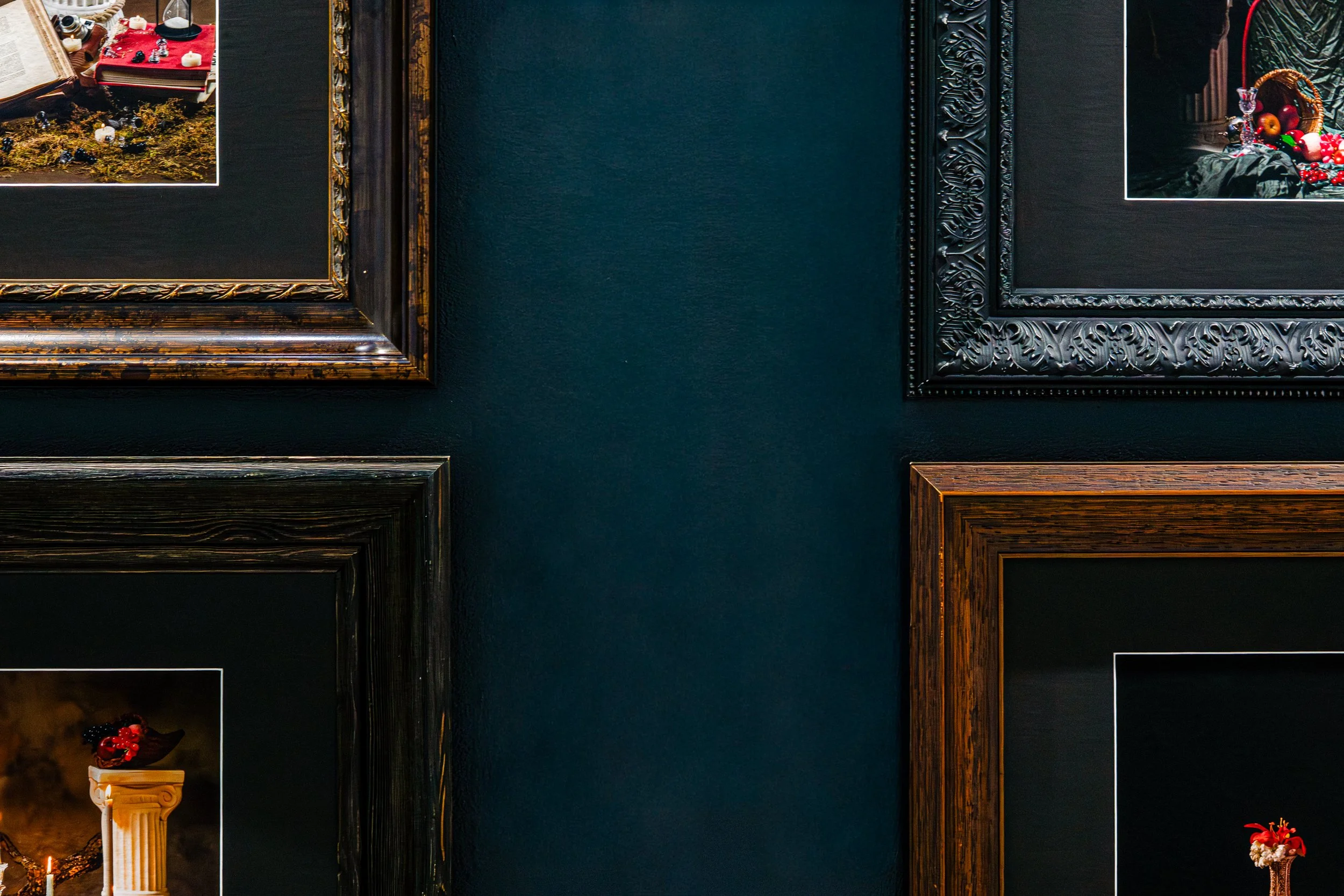
Close up of frames
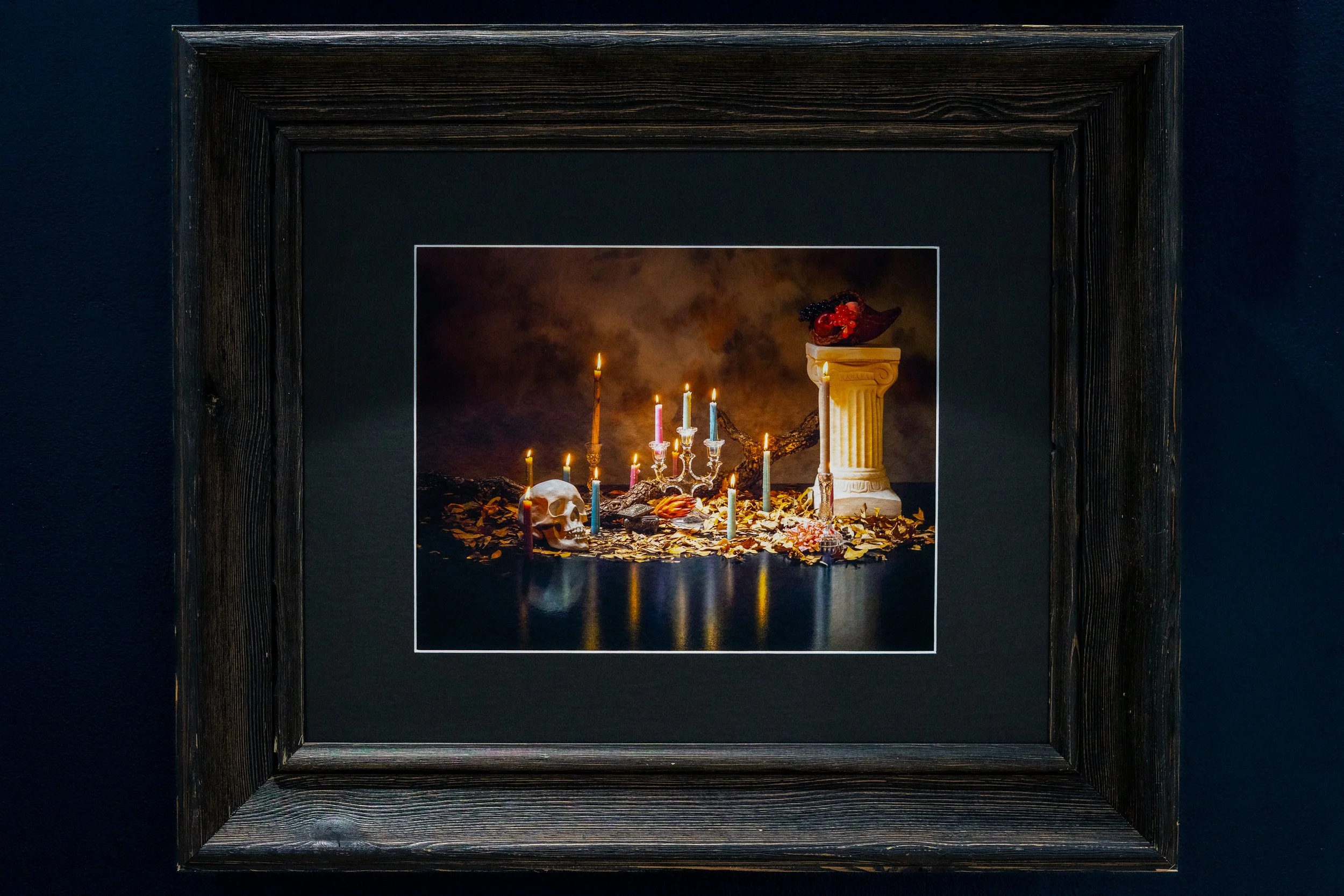
16 x 20 in. Framed Inkjet print, Title: Family

Family
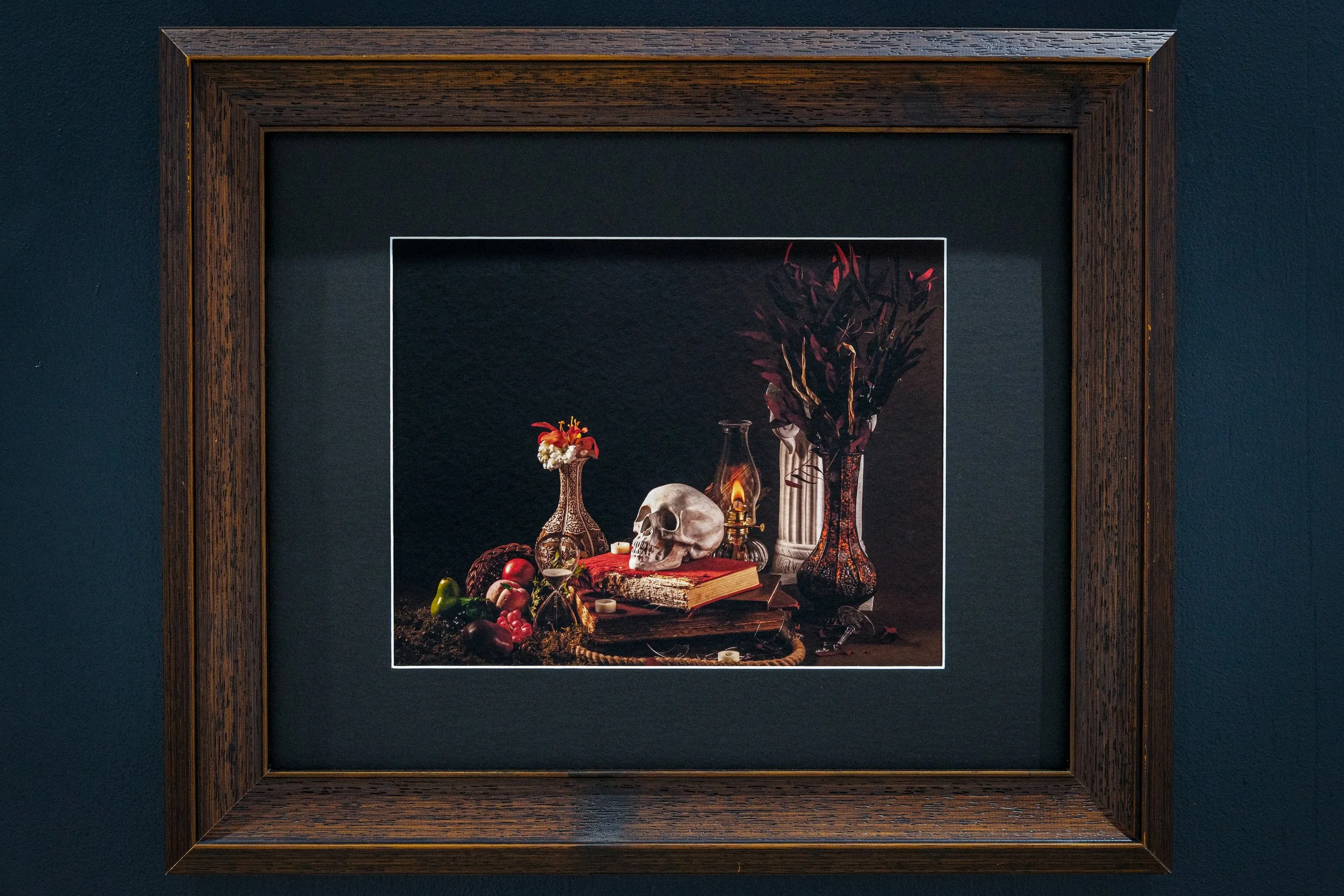
16 x 20 in. Framed Inkjet print, Title: Mortality

Mortality
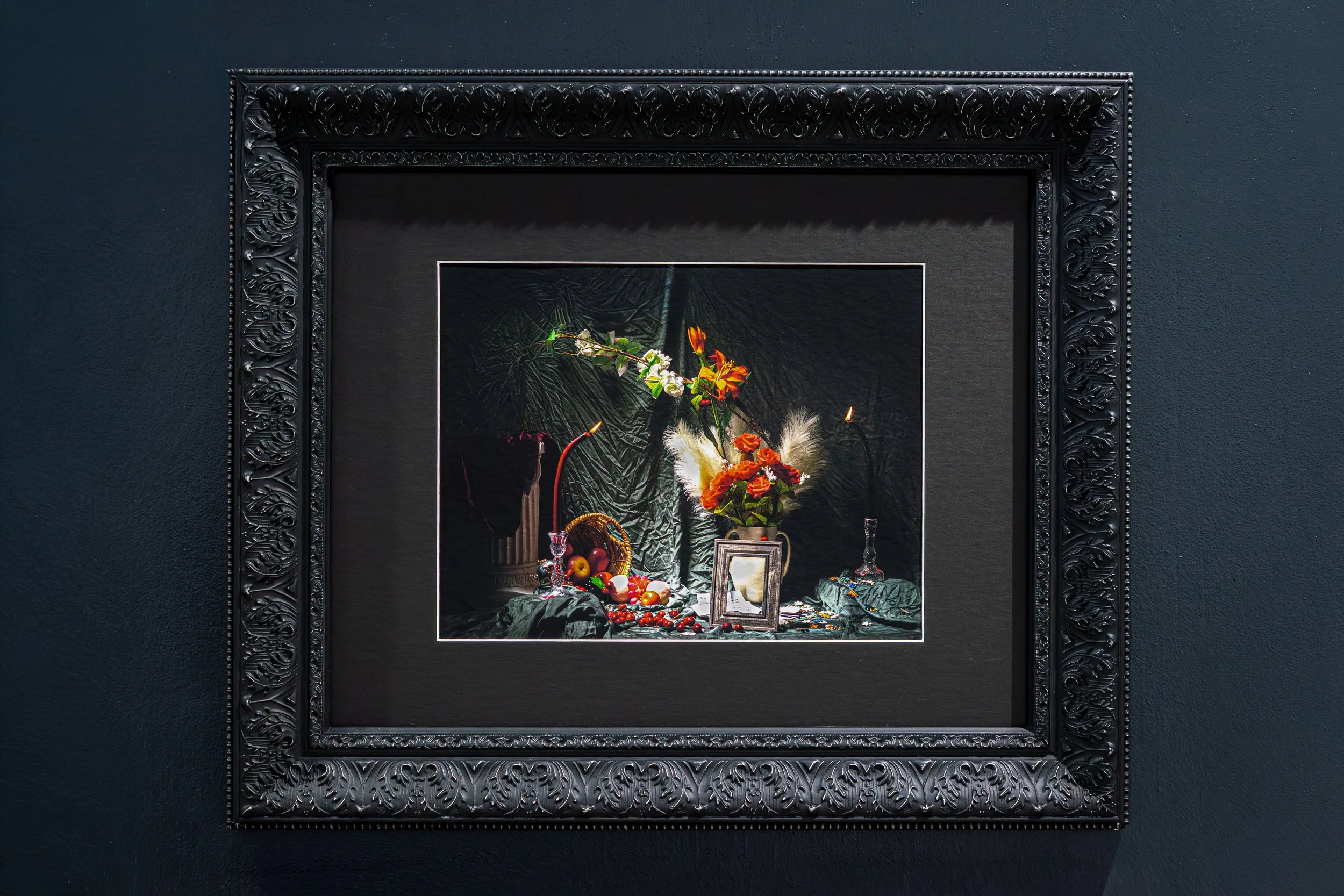
16 x 20 in. Framed Inkjet print, Title: Love
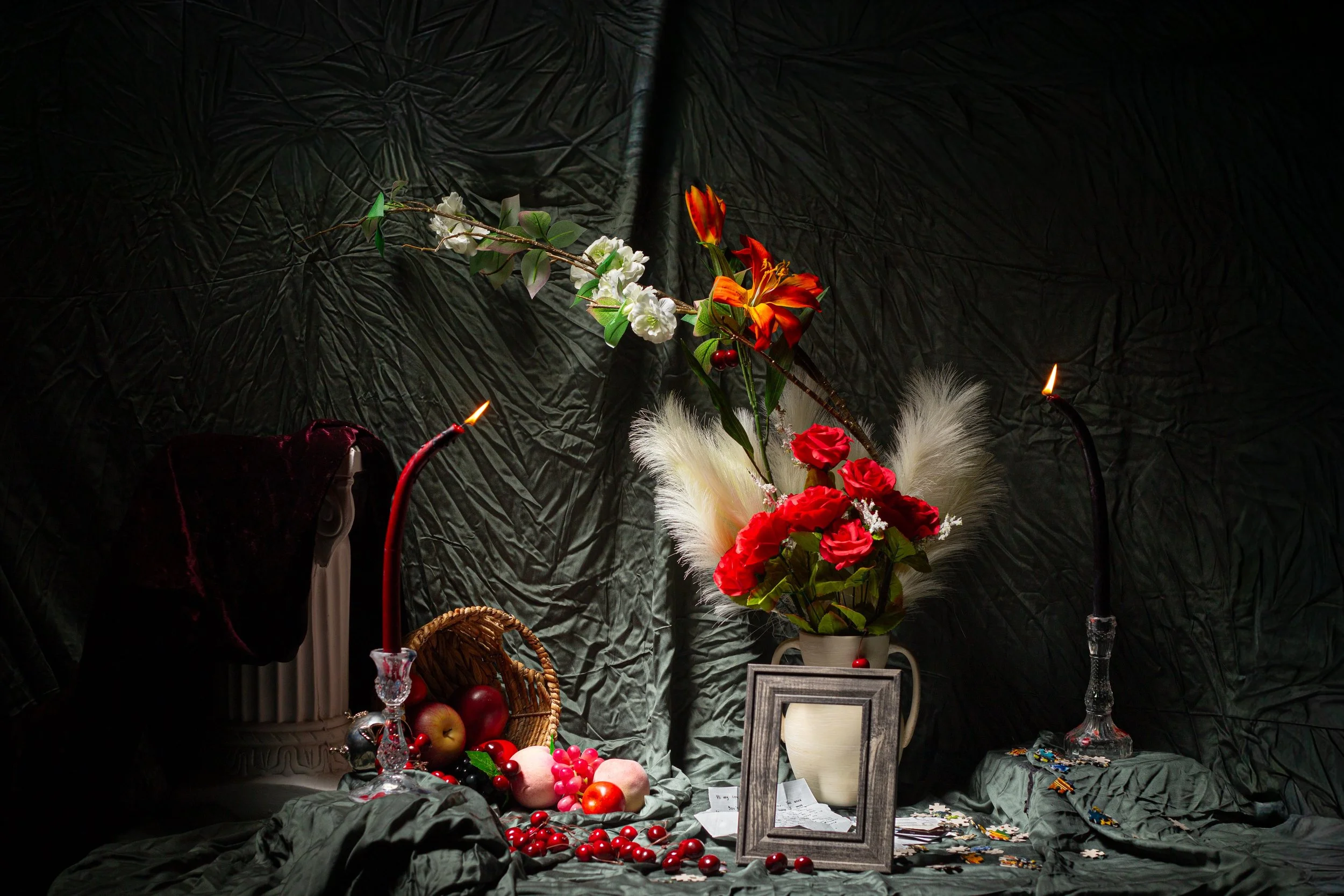
Love
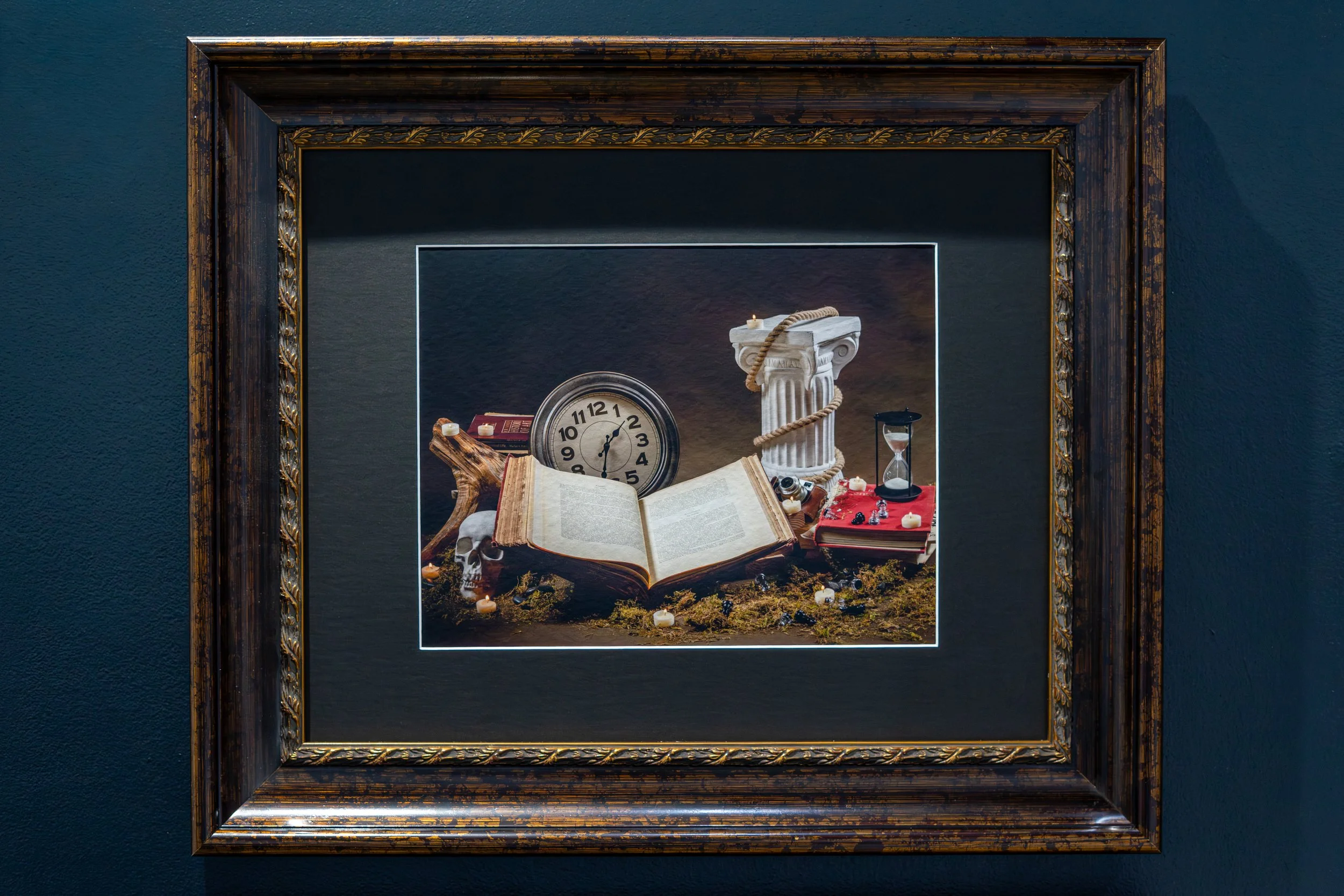
16 x 20 in. Framed Inkjet print, Title: Knowledge

Knowledge
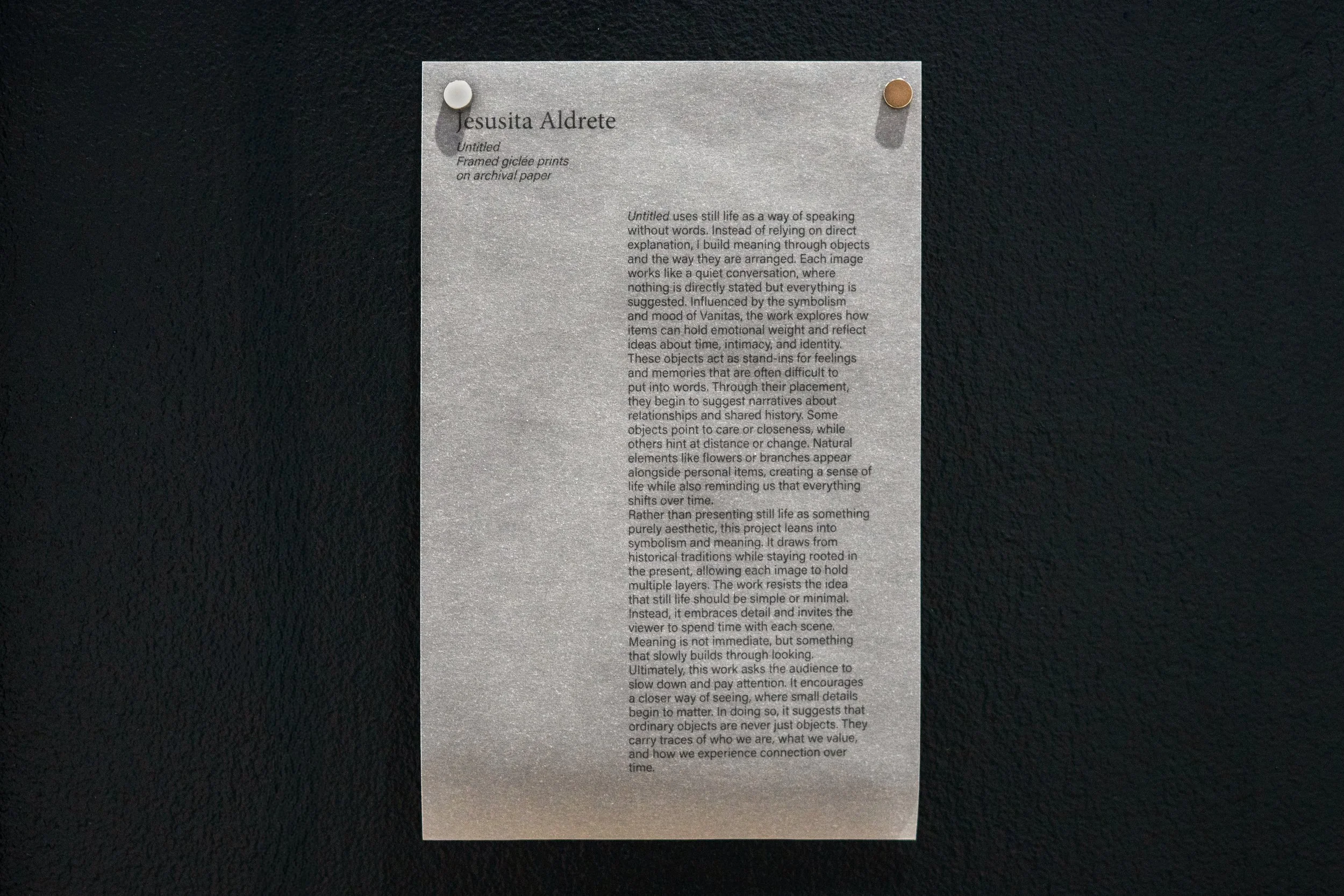
Close up of project statement
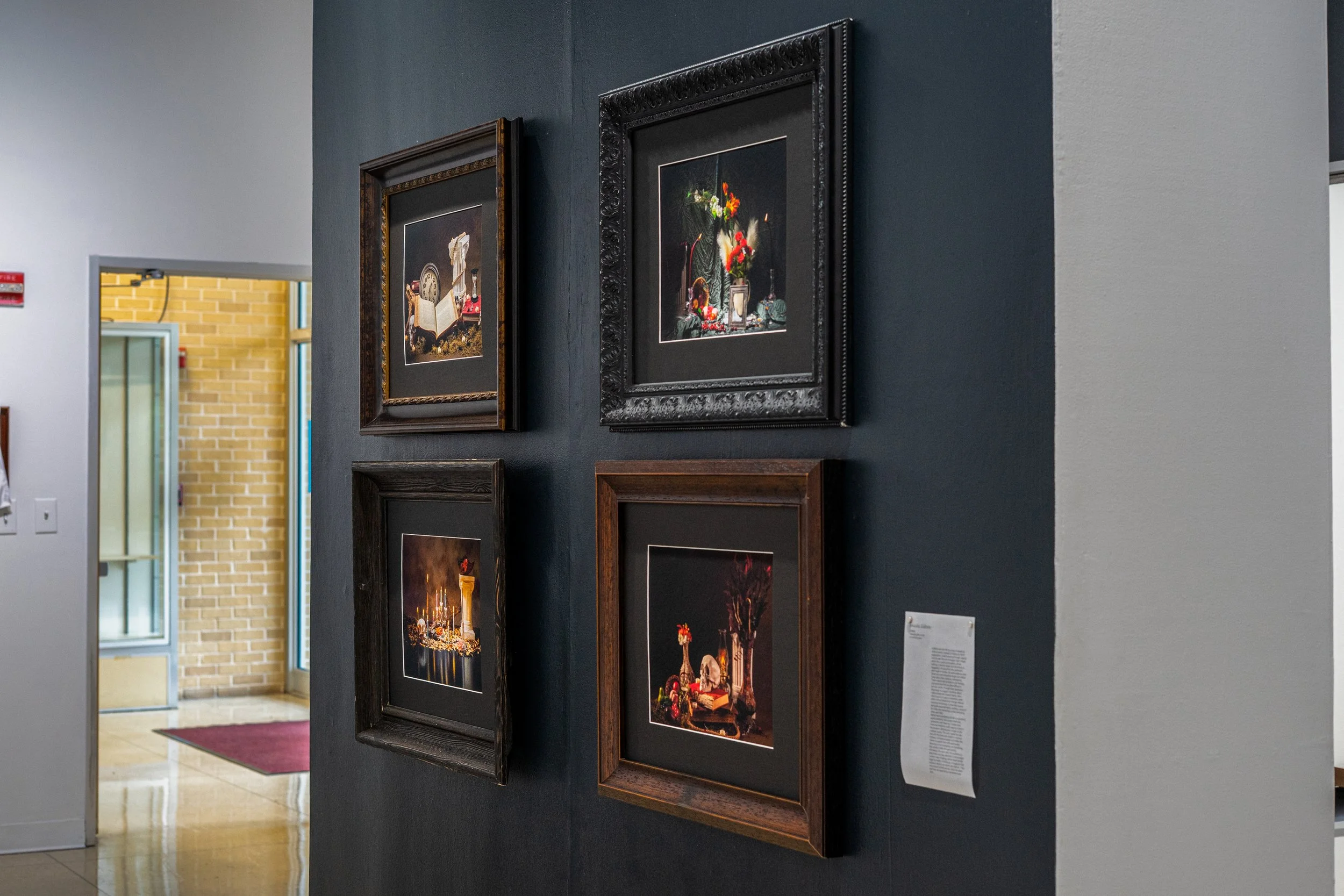
Exhibition wall with work
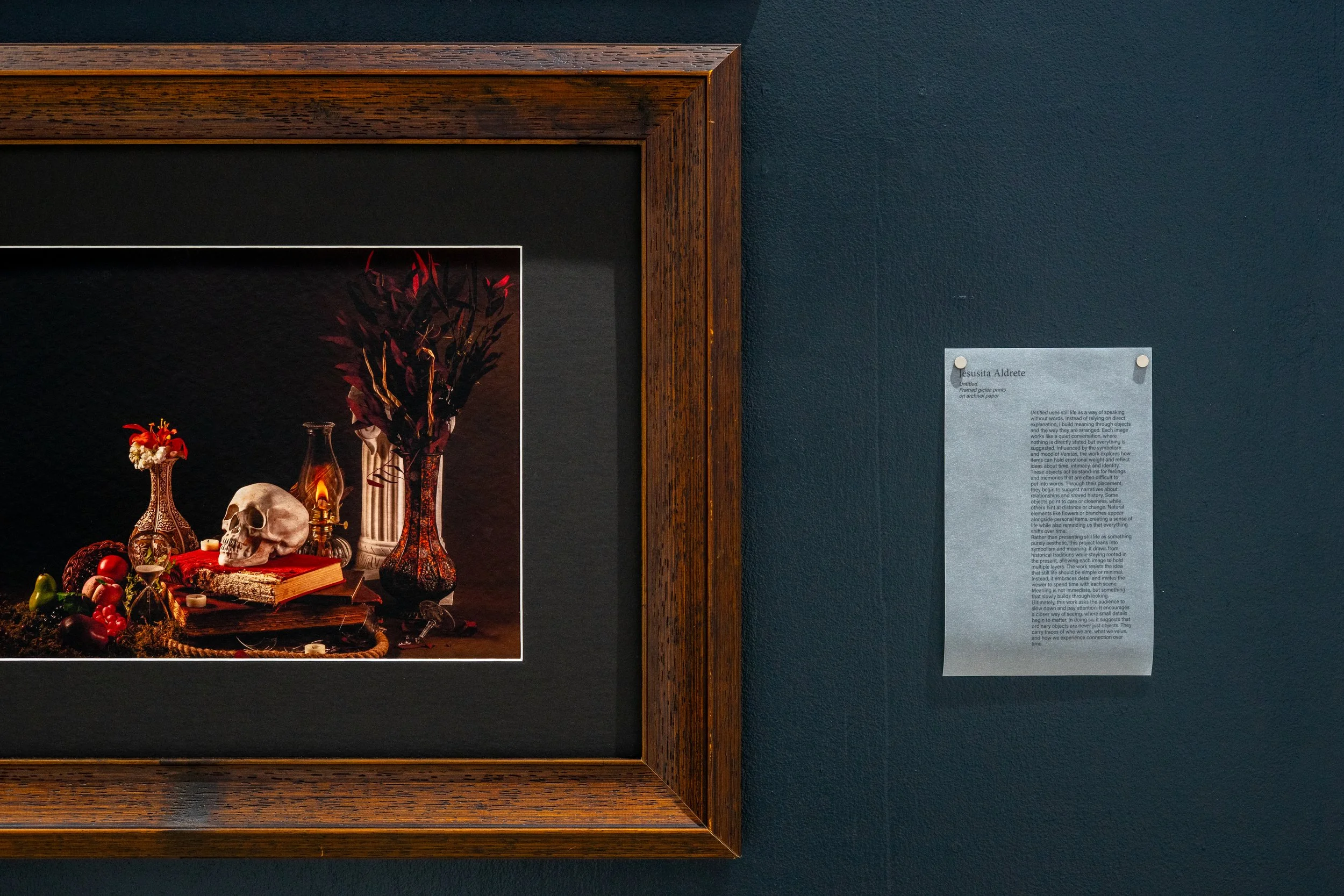
Close up of framed Image and Statement